 Chinese Zodiac Guide
2007 Chinese Zodiac: Fire Pig Dates and Birthday Checks
A birthday in early 2007 needs more than a year-only lookup. January 1 did not begin the Pig year, and the same Pig year continued into the first weeks of 2008.
Quick Answer: Under the Lunar New Year method used here, the 2007 Chinese zodiac is Fire Pig, Ding-Hai, from February 18, 2007 through February 6, 2008. January 1-February 17, 2007 still belongs to the preceding Fire Dog year.
The Fire Pig year at a glance
- Animal
- Pig
- Stem-branch name
- Ding-Hai
- Element of Ding
- Fire
- First included date
- February 18, 2007
- Last included date
- February 6, 2008
- Early 2007 exception
- January 1-February 17: Fire Dog
These are year-sign labels under the Lunar New Year convention, not a complete birth chart.
Two birthdays a day apart can have different year signs
Consider two birthdays: February 17 and February 18, 2007. The first is before Lunar New Year and the second is its first day. Under this page's convention they receive different animal signs even though the Gregorian year is identical. A year-only answer of Pig would miss that distinction.
To check a birthday, first establish whether the date in the record is Gregorian or lunar. A lunar birthday written as a month and day is not automatically the same Gregorian date every year. Do not convert a date that has already been converted, and keep the original notation when asking a relative to clarify a record.
The Hong Kong Observatory's 2007 conversion table places the first lunar month on February 18. That is the relevant boundary here, rather than January 1. A family celebration held a few days earlier or later does not change the calendar date of birth.

Why the label is Fire Pig, not just Pig
Ding-Hai combines two names with different roles. Hai is the branch associated with the Pig; Ding is the heavenly stem associated with Fire. The Observatory identifies 2007 as Ding-Hai, while its stem-branch table shows how the names pair within the sixty-part sequence.
For the element correspondence itself, Table 5 on page 14 of this Harvard-hosted scholarly appendix groups Bing and Ding under Fire. That table supports the label; it is not evidence that a person's temperament, health, relationships, or future are determined by it.
The animal repeats after twelve years, but an animal with the same stem-element pairing returns in the complete sixty-year cycle. Those are different intervals. Reading Pig on two birthday records therefore does not, by itself, show that the records carry an identical stem-branch year name.
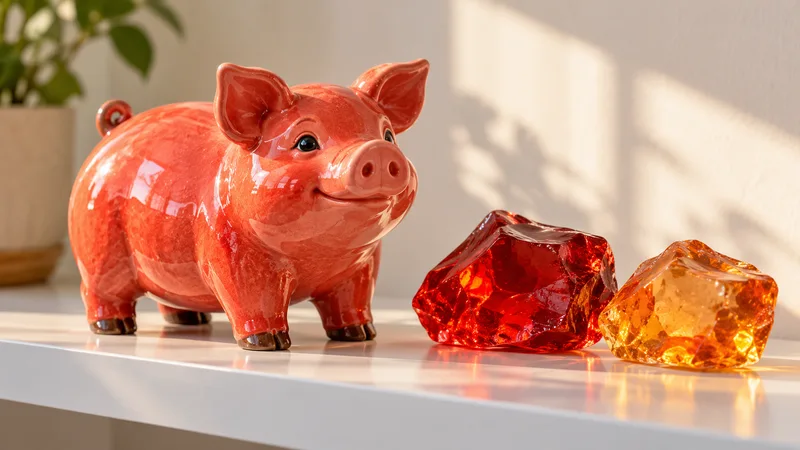
The Pig year also reaches into February 2008
The end date needs the following year's calendar. The Observatory's 2008 table puts Lunar New Year on February 7. The day immediately before it, February 6, is consequently the final date included in this Fire Pig year.
A person born on January 20, 2008 is therefore still in this Pig year under the stated method. A person born on February 7 has crossed into the next lunar year. This is why a table labelled simply '2007 = Pig, 2008 = Rat' needs a boundary note before it can be used for January or February birthdays.
For a practical check, enter the complete date in the Chinese zodiac calculator, then compare its year interval with this guide. If two results disagree, compare their boundary conventions before assuming either birth record is wrong. A calculator is a convenience; the relevant calendar and the chosen method remain the evidence.
Keep calendar labels separate from personal readings
Fire Pig can be a concise cultural description on a birthday card or in a family conversation. It should not stand in for knowing the person. This guide does not assign a fixed set of virtues, weaknesses, compatible partners, or lucky purchases to everyone born during the interval.
The same distinction helps when sharing a result. 'Fire Pig under the Lunar New Year method' tells another reader both the label and how it was obtained. 'Definitely lucky because of 2007' adds a claim the calendar cannot establish. A symbolic gift may express affection without becoming a prediction or a test of character.
The table here is not intended to calculate a BaZi chart or select a solar-term year convention. An early-February disagreement with a service using a different convention is a method question; it cannot be resolved by silently replacing this page's Lunar New Year boundary. For ordinary year comparisons, the zodiac year chart provides the broader date-reference context.

Quick Reference: dates covered by this guide
| Gregorian birthday | Year-sign result here |
|---|---|
| January 1-February 17, 2007 | Fire Dog (preceding year) |
| February 18-December 31, 2007 | Fire Pig |
| January 1-February 6, 2008 | Fire Pig |
| February 7, 2008 | First day of the next lunar year; outside this guide's Pig interval |
The final row names a single transition date, not an unlimited date range.
Questions about 2007 birthdays
Is everyone born in 2007 a Pig?
No. Under the Lunar New Year method, January 1-February 17, 2007 belongs to the preceding Fire Dog year. The Fire Pig year begins on February 18.
Is January 2008 included in the 2007 Pig year?
Yes. The Fire Pig interval continues through February 6, 2008. Lunar New Year falls on February 7, 2008.
What does Ding-Hai mean?
It is a stem-branch year name. Ding corresponds to Fire and Hai to Pig, giving the label Fire Pig.
Does Fire Pig describe a scientifically established personality?
No. The calendar designation identifies a traditional year label. It does not establish a person's character or predict outcomes.
Should I convert my Gregorian birthday into a lunar birthday first?
Not when comparing it with the Gregorian start and end dates in this guide. Check the original calendar used in the birth record and avoid converting the same date twice.
Calendar and element sources
- Hong Kong Observatory: 2007 Gregorian-lunar conversion table
- Hong Kong Observatory: 2008 Gregorian-lunar conversion table
- Hong Kong Observatory: Heavenly Stems and Earthly Branches
- A Selection of Shen Gua's Writings in Translation: Table 5, page 14
Source dates and element correspondence were checked on November 2, 2026. These references support calendar identification, not predictions.