 Chinese Zodiac Guide
Chinese Zodiac and Lunar New Year: Check a Birthday Near the Boundary
Check a Chinese zodiac birthday near Lunar New Year with the full date first, then use the calendar result as cultural context rather than a prediction.
The Chinese zodiac year does not always change on January 1. For a birthday near Lunar New Year, check the full birth date against that year's Lunar New Year boundary before assigning an animal sign. The result is useful cultural calendar context, not a fixed personality or future forecast.
Birthday boundary facts
- Key date
- The relevant boundary is that year's Lunar New Year, not automatically January 1.
- What changes
- The zodiac animal changes when the lunar year begins.
- Best input
- Use the complete birth date, especially for January and February birthdays.
- Useful tool
- A zodiac calculator or year table can confirm the boundary after the full date is known.
- Claim boundary
- A zodiac result is cultural calendar context, not proof of personality or future events.
Why the Gregorian birth year can give the wrong zodiac sign
A Chinese zodiac sign is often described with a Gregorian birth year, but that shortcut can fail near Lunar New Year. The zodiac year changes with the lunar calendar boundary, not with January 1. That means a birthday in the first weeks of a Gregorian year may still belong to the animal sign from the previous lunar year.
This is not a reason to treat every January birthday as uncertain. It is a reason to use the full date when the birthday is close to the seasonal boundary. A quick answer based on the year alone can sound confident while skipping the one detail that decides the result.
The useful distinction is simple: Gregorian years help you begin a lookup, while the Lunar New Year date settles a boundary case. Once that is clear, a family note, school activity, or cultural explanation can name the zodiac animal without turning a rough year label into a mistake.
Check the Lunar New Year boundary before you assign a sign
Start with the complete birthday: month, day, and year. Then find the Lunar New Year date for that specific year. If the birthday comes before that boundary, use the prior lunar year's animal. If it comes on or after the boundary, use the new lunar year's animal. This is a calendar sequence, not a personality test.
A calculator can make the final check quick, but it still needs the right input. Entering only a year leaves the boundary unresolved. For a record you did not create yourself, pause before guessing from an age, a school year, or a short form that omitted the month and day.
Keep the result in plain language. You can say that the birthday falls before or after that year's Lunar New Year, then name the matching zodiac animal. That wording tells a reader how the answer was reached and makes it easier to revisit if a source date is corrected later.
Compare the birthday with the calendar result
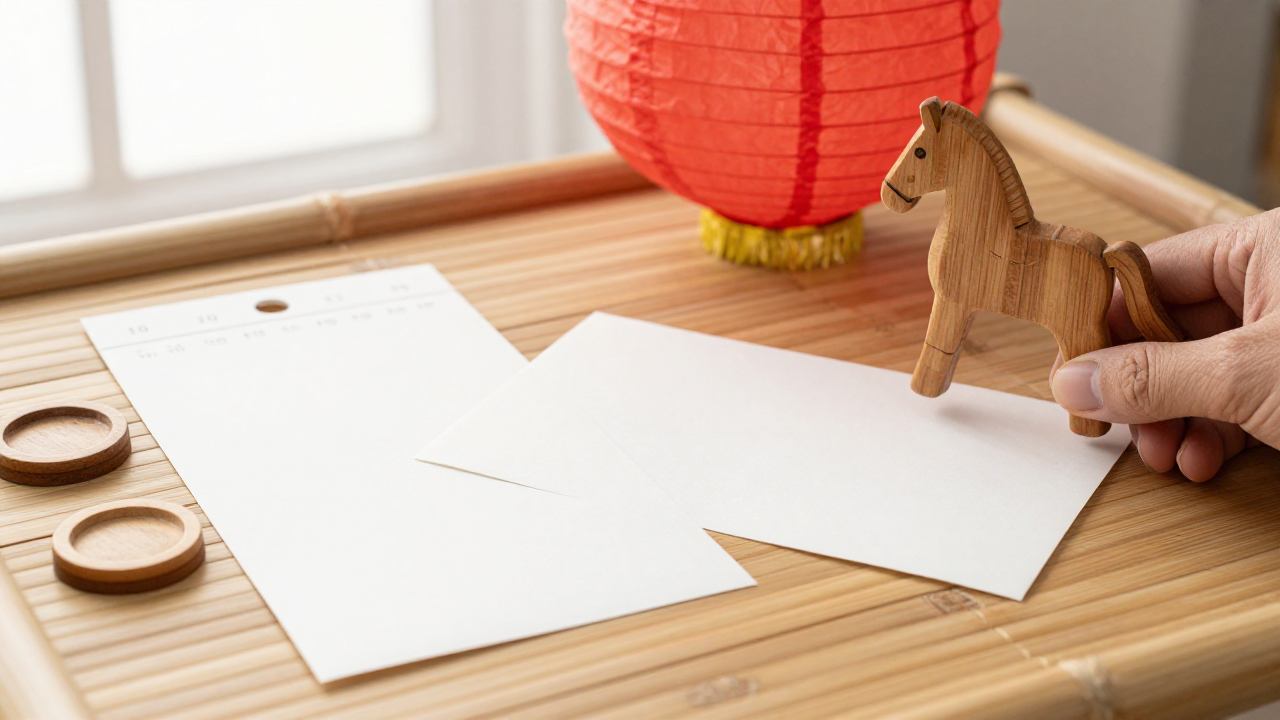
After you have the two dates, compare them directly rather than relying on a list of animal years. The comparison is especially helpful for relatives born in late January or early February, when two people with the same Gregorian year can sit on opposite sides of the lunar boundary.
Write down the evidence you used: the full birthday and the relevant Lunar New Year date. You do not need to decorate the result with lucky or unlucky language. A short record of the date comparison is more useful than a long list of traits, because it shows why the animal label was chosen.
If a source gives different answers, check whether one source used the Gregorian year alone. The disagreement may be about the date boundary rather than about the zodiac system. Resolving that small difference is often enough; there is no need to turn a calendar lookup into an argument about identity.
Write a careful zodiac note for a family record
For a family album or a gift note, keep the wording modest. A useful sentence says that someone was born in the Year of a particular animal according to the Chinese zodiac calendar, after checking the birthday against the Lunar New Year boundary. It gives cultural context without making a promise about the person.
When the date is missing, state the limit rather than filling it in. You can write that the animal sign needs a complete birth date for confirmation. That is clearer and kinder than assigning a sign from a Gregorian year that may cross the lunar boundary.
The same approach works in a classroom. Let learners compare a sample birthday with a Lunar New Year date, then explain the animal-year result as a calendar label. This keeps the activity concrete and avoids asking children to treat a zodiac description as a fixed rule about themselves or a classmate.

Keep the result cultural, not predictive
A correct date check can make a zodiac answer more accurate, but it does not make it a forecast. Animal signs are part of a cultural calendar tradition. They can be a useful starting point for learning, a festive symbol, or a family conversation without being evidence about a person's health, finances, relationships, or future.
That boundary is particularly important when a reader is looking for reassurance. A calendar result can tell you which traditional animal label applies to a date. It cannot decide whether a marriage will work, whether a child will succeed, or what choice someone should make next.
Use the date comparison for what it can do well: clarify a name in a calendar system. Then leave room for the person's own history and choices. The result is more accurate, and the cultural explanation stays respectful.
A calm boundary-date check
- Find the complete birth date before looking up an animal sign.
- Locate the Lunar New Year date for that same year.
- Compare the birthday with the boundary instead of relying on January 1.
- Record the date logic if the result will appear in a family note or lesson.
- Use the animal sign as cultural calendar context, not a personal forecast.
Chinese zodiac Lunar New Year questions
Does the Chinese zodiac change on January 1?
No. The Chinese zodiac year follows the Lunar New Year boundary, so January 1 is not automatically the date when the animal sign changes.
How do I find my Chinese zodiac sign if I was born near Lunar New Year?
Start with the complete birth date, find the Lunar New Year date for that year, and compare the two. A birthday before the boundary uses the prior lunar year's animal; a birthday on or after it uses the new animal.
Why can two people born in the same Gregorian year have different Chinese zodiac signs?
When one birthday falls before Lunar New Year and the other falls after it, the two dates can belong to different lunar zodiac years even though the Gregorian year is the same.
Can I use a zodiac result as a personality prediction?
No. A zodiac result is cultural calendar context. It should not be used to prove personality, compatibility, health, wealth, or future outcomes.